
Sabores da Orla 2026: How João Diamante Turned Rio's Beach Kiosks into a Month-Long Culinary Competition
The 9th edition of Brazil's biggest beachside food festival runs all August — with new rules, R$25,000 on the line, and a world-renowned chef behind the jury
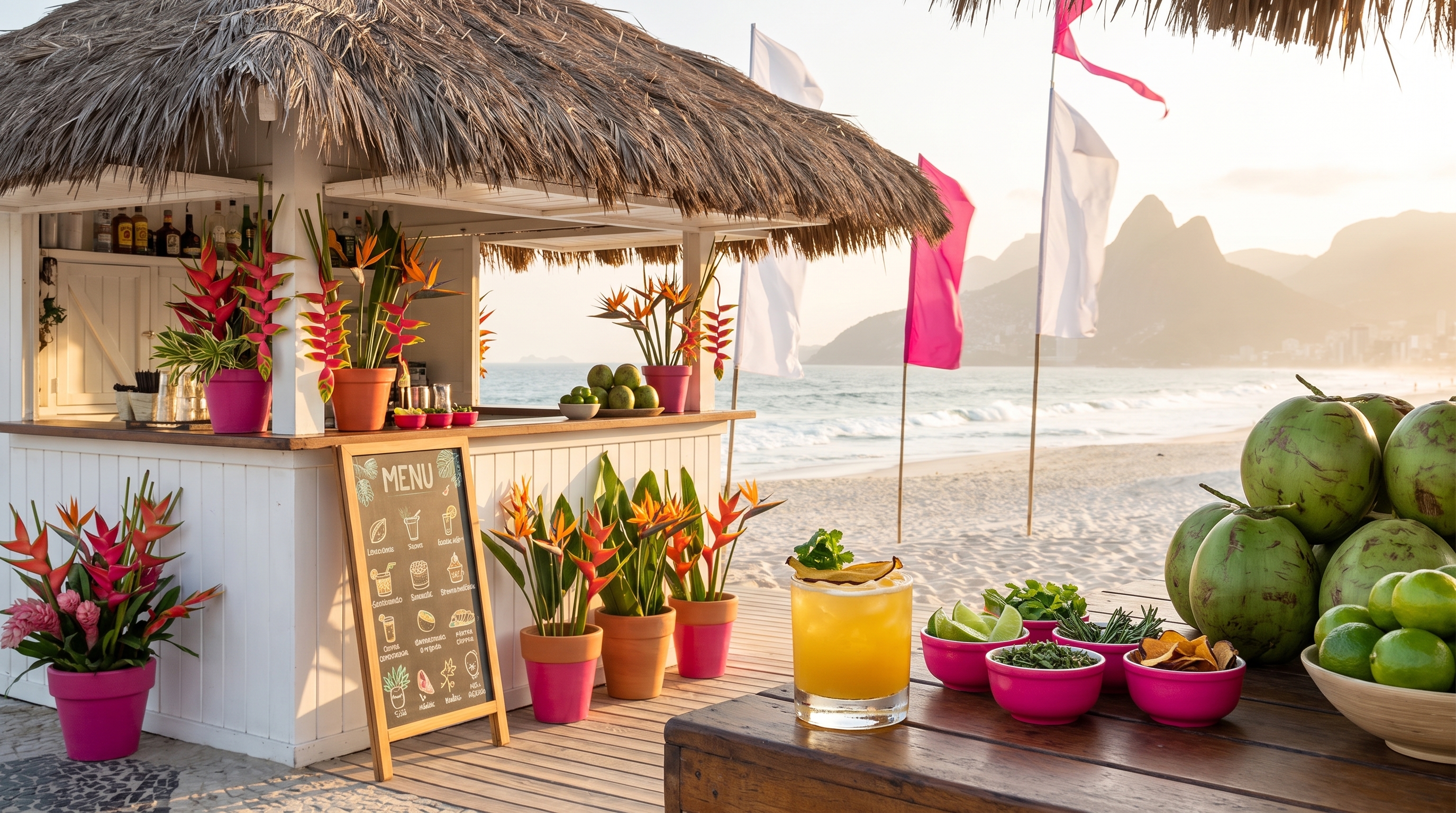
Every August, something shifts on Rio de Janeiro's seafront. The kiosks that line the stretch from Leme to Prainha suddenly look different — menus with QR codes, dishes you've never seen before, and a palpable sense of competition in the salt air. That's Sabores da Orla, and in 2026 it's arrived at its 9th edition with bigger stakes than ever.
Organized by Orla Rio, the festival brings together more than 150 kiosks spread across 34 kilometers of Rio's managed coastline throughout the entire month of August. The competition is divided into six categories: Prato Estrela (Star Dish), Rei do Petisco (Snack King), Pastel do Pódio (Podium Pastel), Sanduba do Mestre (Master Sandwich), Sobremesa dos Sonhos (Dream Dessert), and Caipi das Caipis (Best Caipirinha). Every recipe is created exclusively for the festival — meaning you won't find these dishes anywhere else, at any other time of year.
The new rule that changes everything
The 2026 edition introduced a structural change that sets it apart from every previous edition: to compete in the Prato Estrela category, kiosks are now required to include at least one ingredient sourced from small producers in the state of Rio de Janeiro. Not a suggestion — a requirement.
To make this possible, Orla Rio developed the Guia de Produtores Locais do RJ (Local Producers' Guide) in partnership with TurisRio, mapping producers, regions, and ingredients from across the state — from the Serra highlands to the Costa Verde, from the Região dos Lagos to the North Fluminense region. In practice, a kiosk in Copacabana might be serving a dish featuring artisanal cheese from Nova Friburgo or shrimp from Sepetiba Bay. That's the kind of connection this edition now demands.
The initiative also reflects Orla Rio's commitment to the UN's Sustainable Development Goals — and turns a meal on the beach into something with traceability, origin, and purpose.
João Diamante: the curator who matters
The festival's technical curation is signed by chef João Diamante — and that name carries real weight in Rio's food scene. Born in Salvador (Bahia) and raised in the Complexo do Andaraí favela in Rio de Janeiro, Diamante has a biography that reads like a culinary novel: military service in the Brazilian Navy, a prestigious internship at Le Jules Verne restaurant inside the Eiffel Tower under Alain Ducasse, and then — the decision that surprised everyone — turning down a permanent position at the Hotel Plaza Athénée in Paris to return to Brazil and launch a social project.
That project, Diamantes na Cozinha, has now trained over 4,000 young people from vulnerable communities in gastronomy and hospitality. In 2024, it won the Champions of Change Award from The World's 50 Best Restaurants — the field's most prestigious recognition of social impact through food. In 2025, he was a finalist for the Basque Culinary World Prize. His culinary philosophy is deeply rooted in local ingredients and support for small producers, which makes his presence at Sabores da Orla feel less like a booking and more like a natural fit.
At the festival, Diamante serves as ambassador and technical curator: the specialized jury he leads will determine the final winners in all categories, following the public voting phase.
How the competition works
The format is easy to understand and genuinely fun to be part of. Throughout August, anyone who visits a participating kiosk can scan the QR code on the official menu and cast a vote for their favorite dish. The top five in each category advance to the technical phase, where a team of chefs and specialists makes anonymous visits to evaluate flavor, presentation, creativity, and concept.
The Prato Estrela category has an additional layer: between August 5–7, participating dishes were evaluated by Le Cordon Bleu — one of the world's most recognized culinary schools — using criteria including taste, presentation, creativity, story, and concept.
Total prize money exceeds R$50,000. The Prato Estrela winner takes home R$25,000 plus an exclusive Le Cordon Bleu course. Champions in other categories receive R$5,000 and the same course. There's also a Melhor Ataque (Best Attack) award — borrowing football terminology — which recognizes the kiosk with the best proportional sales performance: every item sold counts as a goal. Winners will be announced at a ceremony on October 8th.
From the World Cup to the Copa de Sabores
It's no coincidence the festival moved from July to August this edition. The Copa de Sabores — the playful identity Sabores da Orla adopted in 2026 — ceded July to the world's biggest football tournament and stepped onto the field right after, bringing its own sporting spirit. Kiosks become national teams, chefs become star players, and the public becomes the crowd. The official opening took place at the Museu da Imagem e do Som in Copacabana on July 28th.
The festival's digital platform goes beyond voting: the Monte sua Rota (Build Your Route) tool lets you create a personalized gastronomic itinerary by beach or by category, share it with friends, and turn an afternoon along the seafront into a true culinary adventure — from Leme to Grumari, one bite at a time.
Why you should go
Sabores da Orla is not just a food fair on the beach. This edition connects beachside cuisine to local, small-scale agriculture; gives visibility to kiosks that rarely appear in conventional guides; and places one of Brazil's most important chefs — with one of the food world's most compelling personal stories — at the heart of the judging. If you have any plans in Rio this August, this deserves a spot in your itinerary. The entry fee is the dish, the vote is free, and every visit becomes a real act of participation.
Want to discover more events and restaurants like this in Rio? Chat with Pico.
Sources